
What is Desi Ghee in English?

Desi ghee is traditional Indian clarified butter crafted specifically from the milk of indigenous (desi) cow breeds like the Gir, whereas regular ghee is often produced from industrial crossbred cow milk or direct cream separation.
What Does the Word Desi Mean in the Context of Dairy?
In Indian context, the word desi translates to native or indigenous to the land. When applied to dairy, it refers specifically to humped Indian cow breeds such as Gir, Sahiwal, Red Sindhi, and Kankrej. These native breeds have adapted over thousands of years to local climates and terrain. Their milk naturally contains A2 beta-casein protein and has a distinct fat composition that translates into fragrant, rich butter when cultured and churned traditionally.
How Does Desi Ghee Differ From Commercial Regular Ghee?
Regular commercial ghee sold in modern supermarkets is typically manufactured from bulk milk collected from high-yield Western crossbred cows (such as Holstein-Friesian or Jersey breeds). It is processed rapidly using industrial cream separators and continuous butter melters. Desi ghee, on the other hand, relies on native cow milk processed through fermentation and gentle churns, giving it a deeper color, grainier texture, and distinct aroma.
| Attribute | Authentic Desi Ghee | Regular Commercial Ghee |
|---|---|---|
| Source Milk | Indigenous Indian cows (e.g., Gir) | Crossbred or high-yield Western cows |
| Protein Type | Naturally A2 Beta-Casein | Primarily A1 Beta-Casein or mixed |
| Making Method | Curd-fermented, bilona churned | Mechanical cream separation |
| Color & Grain | Deep golden yellow with distinct grains | Pale yellow or white with uniform texture |
| Aroma in Pan | Rich, caramelized, roasted nutty notes | Neutral, sweet, or faint cooked milk aroma |
Our cows are not use and throw
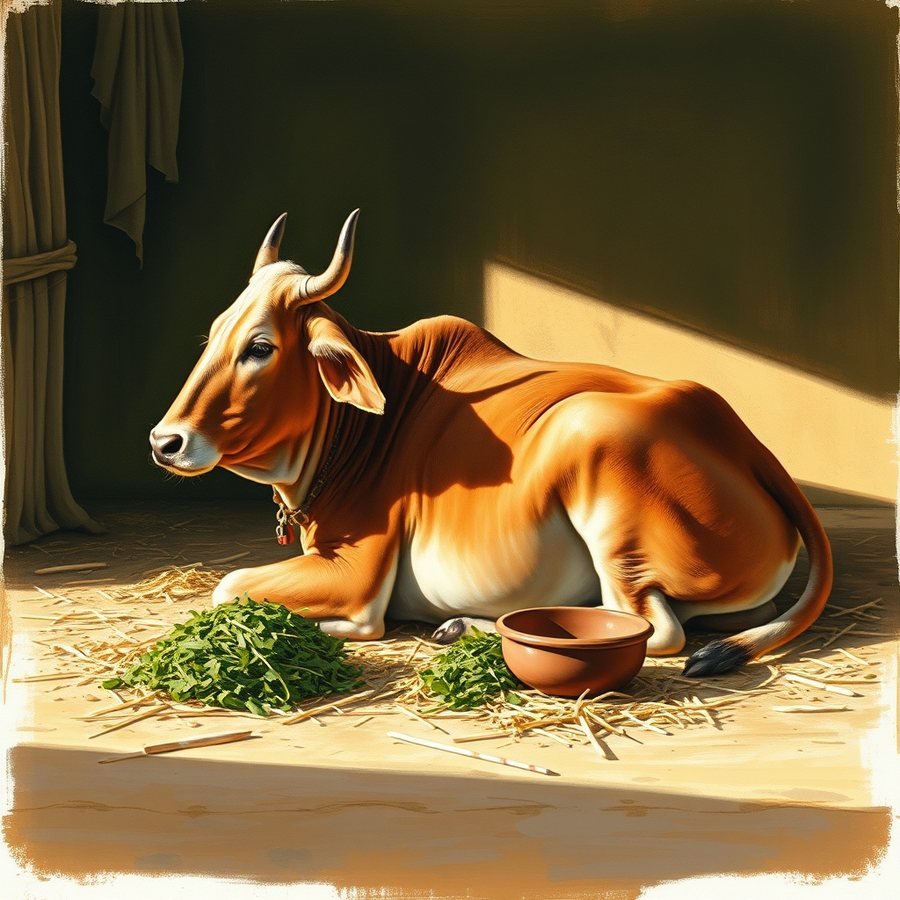
A cow that stops giving milk is still our cow. She stays on the farm, with the same feed, the same shed and the same medical care she had when she was milking. We do not sell her on and we do not let her go. That is the whole basis of the ghee we make — you cannot ask an animal for her milk and then abandon her for it.
Our mission goes further than our own herd. There are cows on the street who are injured every day, who eat plastic, who cry through the night with nobody coming. We want to take them in. The plan is a chain of Organic Farmz gaushalas in several places, so that help is not one shed in one city but something a hurt animal can actually reach.
This takes more than we can carry alone — land, fodder, vets, hands. Come and join our initiative. Anything you give goes to feed, treat and shelter these cows.

Scan with any UPI app
Bank transfer
- Account name Organic Farmz
- Bank Indian Bank
- Account number 8133177322
- IFSC code IDIB000K555
- UPI ID organicfarmz@ptaxis
On a phone, the button above opens your UPI app directly — a QR on the screen you are reading cannot be scanned by that same screen. On a laptop, scan the code with your phone instead.
What Role Does Desi Ghee Play in Daily Indian Meals?
In traditional Indian households, desi ghee is far more than a frying medium. It is an integral kitchen staple brushed over warm phulkas, stirred into hot kitchari, used to bloom whole spices for dal, and combined with ground nuts and wheat flour for winter pinnis. Its clean fat structure holds up beautifully under high kitchen temperatures without burning or breaking down quickly.
How Does Desi Ghee Behave in High-Heat Cooking?
Because the curd-churning and simmering process removes moisture and water-soluble milk solids completely, pure desi ghee has a high smoke point around 250°C (482°F). This makes it exceptional for shallow frying, pan-searing, and high-heat tadkas, keeping spices fragrant without smoking or discoloring rapidly during cooking.
Taste the difference
Small-batch A2 Gir cow ghee, hand-churned to order and delivered across India. Read how we make it if you want the detail first.
Order a jarKeep reading
-
 Cheap Desi Ghee India: Low Prices Mean Trade-offs
Cheap desi ghee in India usually sacrifices traditional bilona processing, A2 milk sourcing, and slow…
Cheap Desi Ghee India: Low Prices Mean Trade-offs
Cheap desi ghee in India usually sacrifices traditional bilona processing, A2 milk sourcing, and slow…
-
 Desi Ghee in Faridabad and Ghaziabad: Fresh Glass Jars
Pure A2 Gir cow bilona ghee reaches Faridabad and Ghaziabad homes in packed glass jars within 24 to 48 hours…
Desi Ghee in Faridabad and Ghaziabad: Fresh Glass Jars
Pure A2 Gir cow bilona ghee reaches Faridabad and Ghaziabad homes in packed glass jars within 24 to 48 hours…
-
 Desi Ghee Noida: Fresh Bilona Jars to Society Gates
Fresh A2 Gir cow bilona ghee delivers directly to Noida sectors and high-rise society gates in protective…
Desi Ghee Noida: Fresh Bilona Jars to Society Gates
Fresh A2 Gir cow bilona ghee delivers directly to Noida sectors and high-rise society gates in protective…
