
Storing Ghee in Brass: Choose Glass or Steel Instead
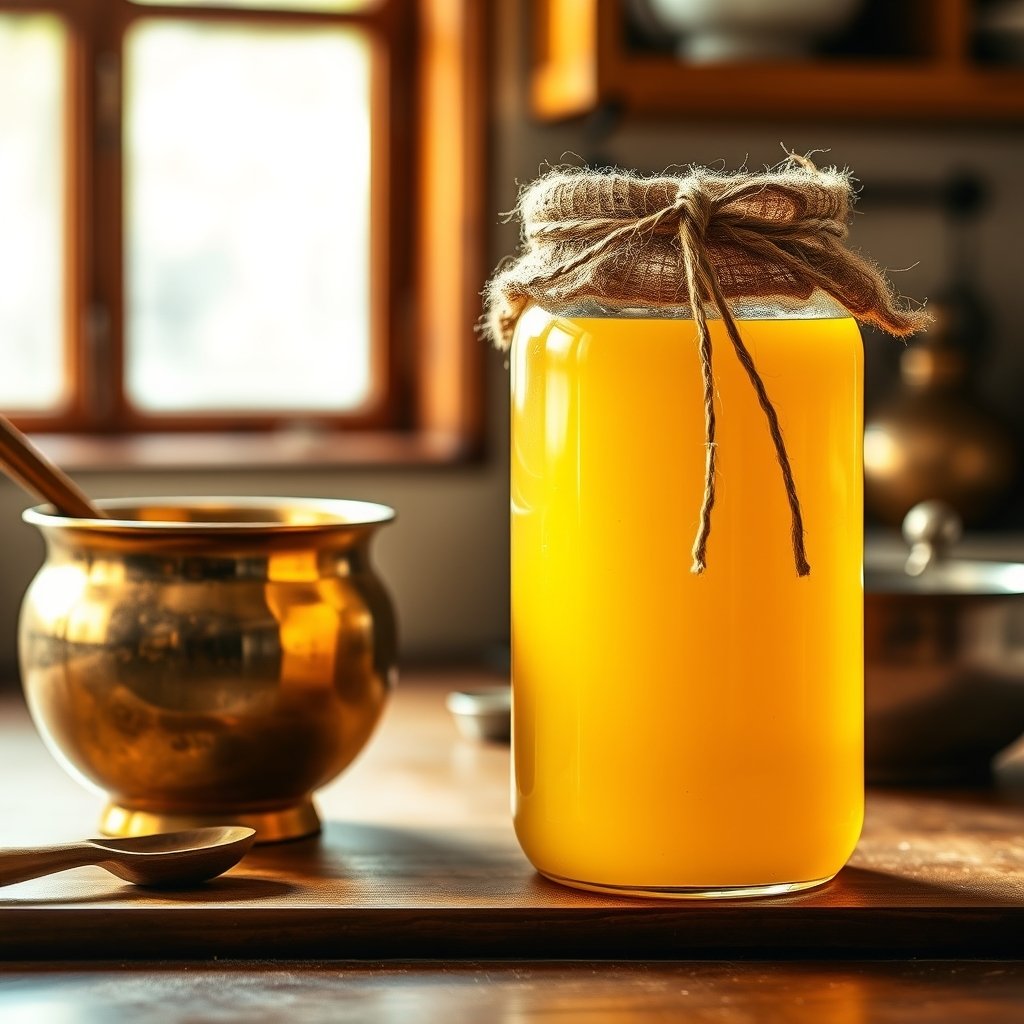
Why does ghee react with brass and copper containers?
Indian kitchens have always had a deep relationship with metals. We cook our dals in brass, boil our water in copper, and serve feasts on heavy bronze plates. It is only natural to assume that our prized A2 Gir cow bilona ghee deserves a place in a beautiful, gleaming brass ghee pot. However, while brass holds an honored place at the stove, it is not the ideal home for storing your ghee over the long term. Understanding how different materials interact with clarified butter helps preserve its delicate, grainy texture and sweet, nutty aroma.
Ghee contains a complex profile of fatty acids and trace amounts of moisture. When these elements remain in contact with metals like brass (which is an alloy of copper and zinc) or pure copper for extended periods, a natural chemical reaction occurs. The acids in the ghee gradually react with the metal, leading to oxidation. Over time, you might notice a green film forming on the inner walls of the vessel. This is copper carbonate, commonly known as verdigris. This reaction not only spoils the clean taste of your bilona ghee but also accelerates the process of rancidity, stripping the fat of its natural shelf life and wholesome qualities.
What are the best materials for long-term ghee storage?
To keep your A2 Gir cow ghee fresh and aromatic for months, you should choose completely non-reactive materials. High-borosilicate glass jars, traditional glazed ceramic jars (known as martabans), and food-grade stainless steel are the best options. Glass and ceramic are completely inert, meaning they will never react with the fatty acids in the ghee, regardless of the temperature or time. Stainless steel is also a highly stable, practical choice for active kitchens where glass might be prone to slipping and breaking on stone countertops. When using these containers, ensure they have airtight lids to keep moisture and ambient kitchen odors out.
Our cows are not use and throw

A cow that stops giving milk is still our cow. She stays on the farm, with the same feed, the same shed and the same medical care she had when she was milking. We do not sell her on and we do not let her go. That is the whole basis of the ghee we make — you cannot ask an animal for her milk and then abandon her for it.
Our mission goes further than our own herd. There are cows on the street who are injured every day, who eat plastic, who cry through the night with nobody coming. We want to take them in. The plan is a chain of Organic Farmz gaushalas in several places, so that help is not one shed in one city but something a hurt animal can actually reach.
This takes more than we can carry alone — land, fodder, vets, hands. Come and join our initiative. Anything you give goes to feed, treat and shelter these cows.

Scan with any UPI app
Bank transfer
- Account name Organic Farmz
- Bank Indian Bank
- Account number 8133177322
- IFSC code IDIB000K555
- UPI ID organicfarmz@ptaxis
On a phone, the button above opens your UPI app directly — a QR on the screen you are reading cannot be scanned by that same screen. On a laptop, scan the code with your phone instead.
Is it safe to use a brass ghee pot for daily serving?
Yes, you do not need to banish your beautiful brass ghee dani from the kitchen entirely. Using a small brass or bronze cup with a spoon next to your stove is perfectly fine, provided you only fill it with enough ghee to last three to four days. When ghee is consumed quickly and the vessel is washed regularly, there is simply not enough time for significant oxidation to take place. The key is to wash the brass pot thoroughly with a mild soap and a soft scrub between refills, ensuring that no old, sticky residue remains at the bottom to kickstart the spoilage of the fresh batch.
How does traditional Ayurveda view ghee storage vessels?
Traditional Ayurvedic practices emphasize preserving the purity (sattva) of foods through mindful storage. Classical texts recommend storing prepared ghruta (ghee) in materials that do not alter its natural properties. Clay pots (mitti ke bartan) and glass or stone jars were traditionally preferred because of their cooling properties and complete lack of reactivity. While brass and copper are highly recommended in Ayurveda for drinking water or quick cooking due to their heat conductivity, they are systematically avoided for storing acidic foods, fermented items, and fats like ghee over long durations to prevent the accumulation of unwanted metallic compounds.
How can you tell if your ghee has reacted with metal?
Identifying metal-spoiled ghee is straightforward once you know what signs to look for. Freshly opened A2 Gir cow bilona ghee has a rich, pale yellow to golden color, a distinct grainy (danedaar) texture, and a comforting, sweet aroma. If it has reacted with a brass or copper vessel, you will first notice a change in smell—it will lose its sweet warmth and carry a sharp, metallic, or soapy odor. On closer inspection, the ghee touching the sides of the container may develop a faint greenish or greyish discoloration. Finally, the taste will be distinctly bitter or harsh on the back of the throat. If you observe any of these changes, it is best to discard that batch and clean your vessel thoroughly.
Taste the difference
Small-batch A2 Gir cow ghee, hand-churned to order and delivered across India. Read how we make it if you want the detail first.
Order a jarKeep reading
-
 The Right Jar for Ghee: Glass or Steel, Never Plastic
Glass or food-grade steel is the right jar for ghee: both are inert, so they hold its aroma without…
-
 How to Store Ghee Properly
Authentic bilona ghee is naturally shelf-stable, but external moisture is its silent enemy. Learn how simple…
-
 How Long Does Ghee Last Once Opened?
Once opened, pure A2 Gir cow bilona ghee lasts 6 to 9 months in a pantry and over a year in the fridge.…
