
Ghee Shelf Life on Label: Settled by FSSAI & Brand
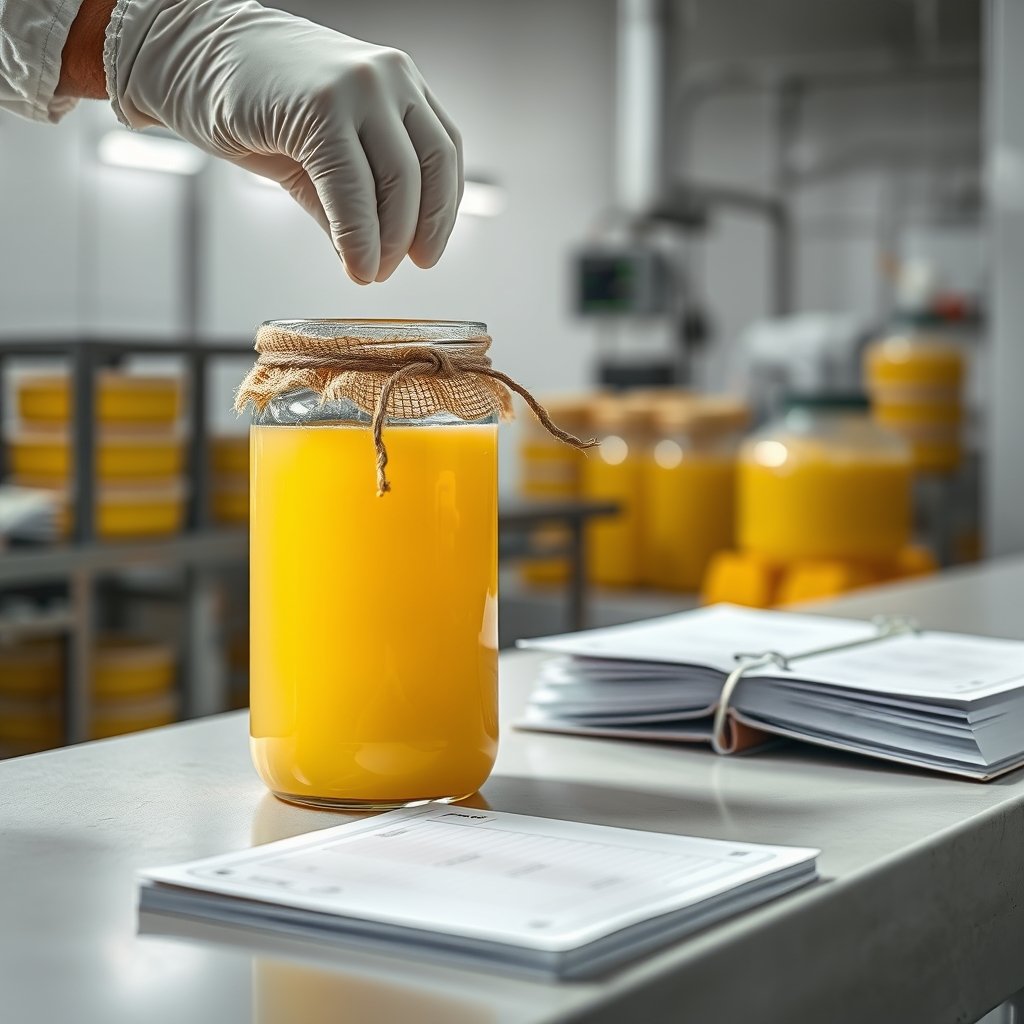
The shelf life printed on a private-label ghee jar is ultimately decided by the brand owner whose name appears on the front label, working within FSSAI regulations and retention data established with their contract manufacturer. While the business churning and packing the fat provides batch quality parameters and stability observations, the regulatory burden of the best-before declaration rests with the entity marketing the product under its own license.
Who holds legal responsibility for the expiry date on a private-label jar?
The brand owner holds primary regulatory responsibility for every claim on the packaging, including the best-before date and storage instructions. Under Indian food safety laws, a white-label contract requires the brand's own FSSAI license number alongside the manufacturer's operational license details. Because the brand owner markets the product to consumers, they must ensure the stated shelf life is realistic for ambient kitchen storage. The manufacturer advises on fat stability based on moisture content and filling practices, but the brand owner must be completely comfortable defending that date if audited by food safety inspectors or questioned by customers.
What factors determine how long a batch of ghee stays fresh?
Fat stability in traditional bilona ghee depends on moisture removal, ambient exposure, and container sealing rather than artificial additives. During traditional small-pot simmering, butter made from curd churns is clarified until water traces evaporate completely. Residual water is the primary cause of spoilage, as free moisture encourages microbial growth and sour off-notes. When sealed hot in glass jars, pure milk fat remains protected from light, ambient air humidity, and oxidation. The practical stability of a batch is decided by moisture testing at churn, clean hand-filling protocols, and the moisture barrier provided by airtight caps.
Our cows are not use and throw

A cow that stops giving milk is still our cow. She stays on the farm, with the same feed, the same shed and the same medical care she had when she was milking. We do not sell her on and we do not let her go. That is the whole basis of the ghee we make — you cannot ask an animal for her milk and then abandon her for it.
Our mission goes further than our own herd. There are cows on the street who are injured every day, who eat plastic, who cry through the night with nobody coming. We want to take them in. The plan is a chain of Organic Farmz gaushalas in several places, so that help is not one shed in one city but something a hurt animal can actually reach.
This takes more than we can carry alone — land, fodder, vets, hands. Come and join our initiative. Anything you give goes to feed, treat and shelter these cows.

Scan with any UPI app
Bank transfer
- Account name Organic Farmz
- Bank Indian Bank
- Account number 8133177322
- IFSC code IDIB000K555
- UPI ID organicfarmz@ptaxis
On a phone, the button above opens your UPI app directly — a QR on the screen you are reading cannot be scanned by that same screen. On a laptop, scan the code with your phone instead.
What is the difference between manufacturer and brand owner roles in label compliance?
Both parties share distinct responsibilities when bringing a packaged ghee jar to store shelves or e-commerce fulfillment centers. The table below outlines how duties are divided between the production unit and the marketing brand.
| Operational Area | Manufacturer Responsibility | Brand Owner Responsibility |
|---|---|---|
| FSSAI Compliance | Maintains production facility license and sanitary hygiene standards | Provides primary brand FSSAI license number and mandatory consumer declarations |
| Packaging & Art | Applies physical label and batch code details accurately during filling | Supplies print-ready artwork, net weight declarations, and branding copy |
| Quality & Retention | Performs moisture checks and stores retention samples from every churn | Establishes best-before date claims and manages customer feedback |
| Product Handover | Delivers sealed, code-stamped glass jars ready for immediate dispatch | Manages retail distribution, shelf display, and transit conditions |
How does the white-label order process work from sample to delivery?
Launching a branded jar begins when an enquiry arrives via email or messaging with your brand name, target jar size, estimated monthly volume, and desired launch timing. A sample batch is prepared and tasted so you can evaluate the granular texture, aroma, and mouthfeel before committing to a commercial batch. Once approved, the supply rate, minimum batch size, container style, label handling terms, and batch resolution guidelines are codified in a formal agreement. You then provide print-ready artwork bearing your FSSAI details and mandatory statutory markings. The ghee is crafted to order using traditional bilona methods near Delhi, packed into sealed glass jars, stamped with batch codes, and shipped to your address ready for retail so you never have to repack open fat.
Why must a brand owner test retention samples over time?
Keeping reference jars from every batch protects both your retail reputation and your legal standing. Environmental conditions across Indian kitchens vary dramatically, from high summer humidity to dry winter cold. Keeping retention jars in standard room temperature conditions allows a brand to monitor how texture, color, and aroma evolve across changing seasons. If a customer reports an unexpected off-note, comparing their batch code against your archived retention jar reveals whether the issue occurred during initial processing or from improper storage after opening. To discuss custom batching, jar sizes, or setting up your label declarations with us, visit our white-label partnership page to initiate a sample request.
Taste the difference
Small-batch A2 Gir cow ghee, hand-churned to order and delivered across India. Read how we make it if you want the detail first.
Order a jarKeep reading
-
 Shelf Life on a Private-Label Ghee Jar: Who Decides?
The shelf life date on a private-label ghee jar is set by the brand owner in agreement with the manufacturer…
-
 Private Label Ghee: Both FSSAI Numbers Required
A private label ghee jar must show both the brand owner's FSSAI license number and the manufacturer's FSSAI…
-
 Start Your Own Ghee Brand in India: The 5 Steps
Starting a ghee brand in India requires choosing your buyer, tasting producer samples, securing FSSAI…
