
Mould in a Ghee Jar: It Comes From Water Droplets

Mould grows in a ghee jar because trapped water droplets from wet spoons, condensation, or loose lids create an environment where airborne fungal spores can feed. Pure ghee clarified through the traditional bilona method is virtually water-free. When butter churned from cultured A2 Gir cow curd is slow-simmered over low flame, moisture evaporates completely, leaving behind clean fat and caramelized milk solids. In Indian home cooking and traditional ayurvedic storage, this low-moisture environment is why pure fat remains shelf-stable at room temperature without synthetic preservatives. However, fat alone cannot shield the jar if liquid water is accidentally introduced from the kitchen outside.
How does water enter a sealed or pantry ghee jar?
Water enters a ghee jar through routine kitchen habits, most commonly when a spoon that is damp or recently dipped in hot soup or curry goes back into the container. Moisture also enters when an open jar sits next to a boiling rice pot or steaming kadhai, allowing water vapor to settle on the inner rim. In humid seasons or monsoon months, shifting a jar between temperature extremes can form fine drops of condensation inside the glass lid. Because water and oil do not mix, these liquid drops rest on top of the fat rather than evaporating, creating isolated pockets of moisture.
Why can mould grow in ghee if water gets inside?
Mould grows in ghee when microscopic water droplets provide the hydration that airborne fungal spores need to germinate and multiply. Microscopic spores circulate naturally in indoor air, remaining inactive as long as they rest on completely dry surfaces. Pure ghee contains less than 0.5% moisture, which is too dry for microbial activity. When a water droplet enters the jar, spores settle in that wet patch and feed on the tiny residual milk solids present in unrefined bilona ghee, resulting in white, green, or dark spots across the surface.
Our cows are not use and throw
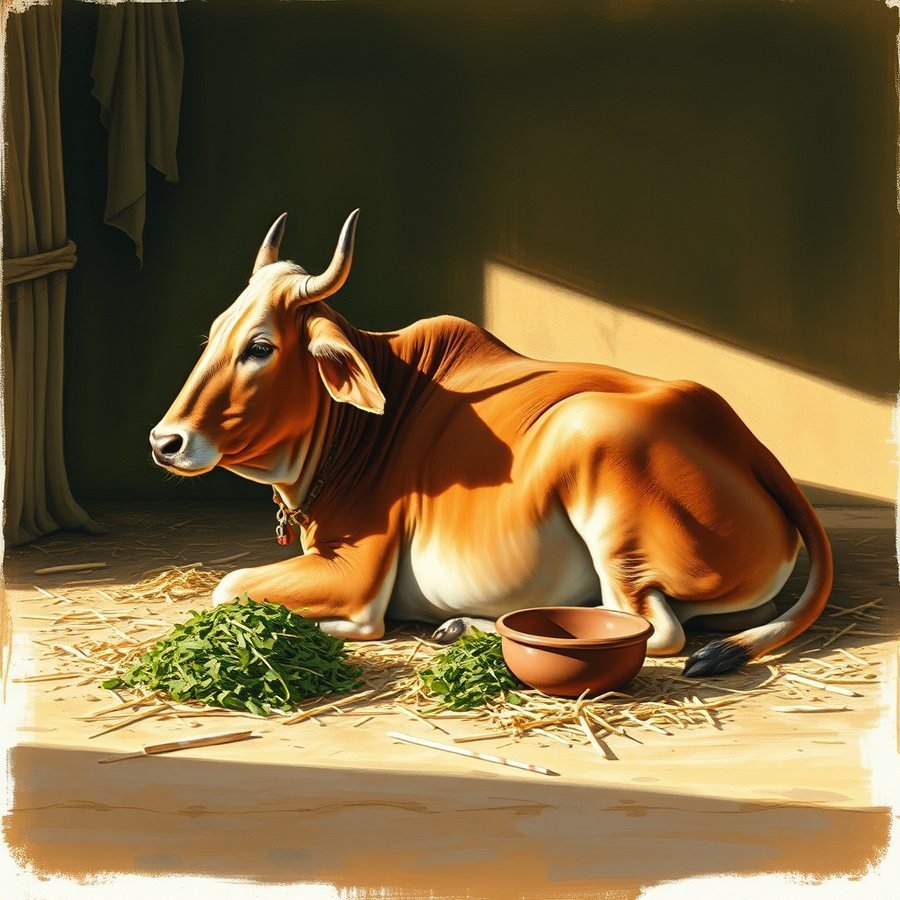
A cow that stops giving milk is still our cow. She stays on the farm, with the same feed, the same shed and the same medical care she had when she was milking. We do not sell her on and we do not let her go. That is the whole basis of the ghee we make — you cannot ask an animal for her milk and then abandon her for it.
Our mission goes further than our own herd. There are cows on the street who are injured every day, who eat plastic, who cry through the night with nobody coming. We want to take them in. The plan is a chain of Organic Farmz gaushalas in several places, so that help is not one shed in one city but something a hurt animal can actually reach.
This takes more than we can carry alone — land, fodder, vets, hands. Come and join our initiative. Anything you give goes to feed, treat and shelter these cows.

Scan with any UPI app
Bank transfer
- Account name Organic Farmz
- Bank Indian Bank
- Account number 8133177322
- IFSC code IDIB000K555
- UPI ID organicfarmz@ptaxis
On a phone, the button above opens your UPI app directly — a QR on the screen you are reading cannot be scanned by that same screen. On a laptop, scan the code with your phone instead.
Can you scrape mould off ghee and save the rest?
No, you cannot safely scrape mould off ghee and consume the remaining fat beneath it. Visible surface growth means microscopic fungal threads have already branched deeper into the liquid or semi-solid fat layers alongside the trapped moisture. Mould also releases enzymes that break down fat molecules, causing rapid rancidity and off odors throughout the container. Once mould is visible, the entire jar is ruined and should be thrown out immediately.
How does moisture react in bilona ghee versus processed fat?
Bilona ghee and industrial processed fats react differently to water exposure due to their distinct preparation methods and solid content. Traditional A2 Gir cow bilona ghee contains natural caramelized curd solids from slow hand-churning and simmering, which offer nutrients to surface spores if moisture collects. Commercial ghee produced from cream separator milk fat is heavily filtered and stripped of solids, but introduced water still causes localized souring and rancidity over time.
| Handling Habit | Moisture Level | Mould Growth Risk | Impact on Ghee Quality |
|---|---|---|---|
| Dry dedicated spoon, sealed tight, stored away from steam | Zero external water (under 0.5% moisture) | Extremely low | Maintains natural aroma, grain, and stability for months |
| Damp spoon, loose lid, left near cooking steam | Water droplets settle on fat surface | High (spores germinate in free water) | Leads to visible surface mould, sour smell, and complete discard |
How can you prevent moisture and mould in your ghee jar?
You prevent moisture in your ghee jar by keeping a completely dry brass or stainless steel spoon dedicated solely to scooping ghee. Never dip a utensil directly from a steaming pot into your storage container, as rising steam leaves invisible condensation on metal handles and blades. Keep your main glass jar capped tightly inside a cool, dry pantry cupboard away from heat sources. For daily kitchen tasks, transfer 100 to 200 grams into a small brass container, keeping the primary jar sealed to protect the main supply.
Taste the difference
Small-batch A2 Gir cow ghee, hand-churned to order and delivered across India. Read how we make it if you want the detail first.
Order a jarKeep reading
-
 Ghee Quantity for a Couple: A 500ml Jar Works
A 500ml jar of ghee is the ideal quantity for a couple, lasting about four to six weeks across daily tadkas…
-
 Ghee for Joint Family: Rotate 1-Litre Glass Jars
Buying ghee for a joint family works best with monthly one-litre jars rather than large bulk tins, keeping…
-
 Ghee Jar Sizes for Brands: Use Small Jars for Trial
Small ghee jar sizes lower checkout prices to drive customer trial, while larger jars improve courier…