
How to Buy Real Desi Ghee in Delhi: Spot the False Claims
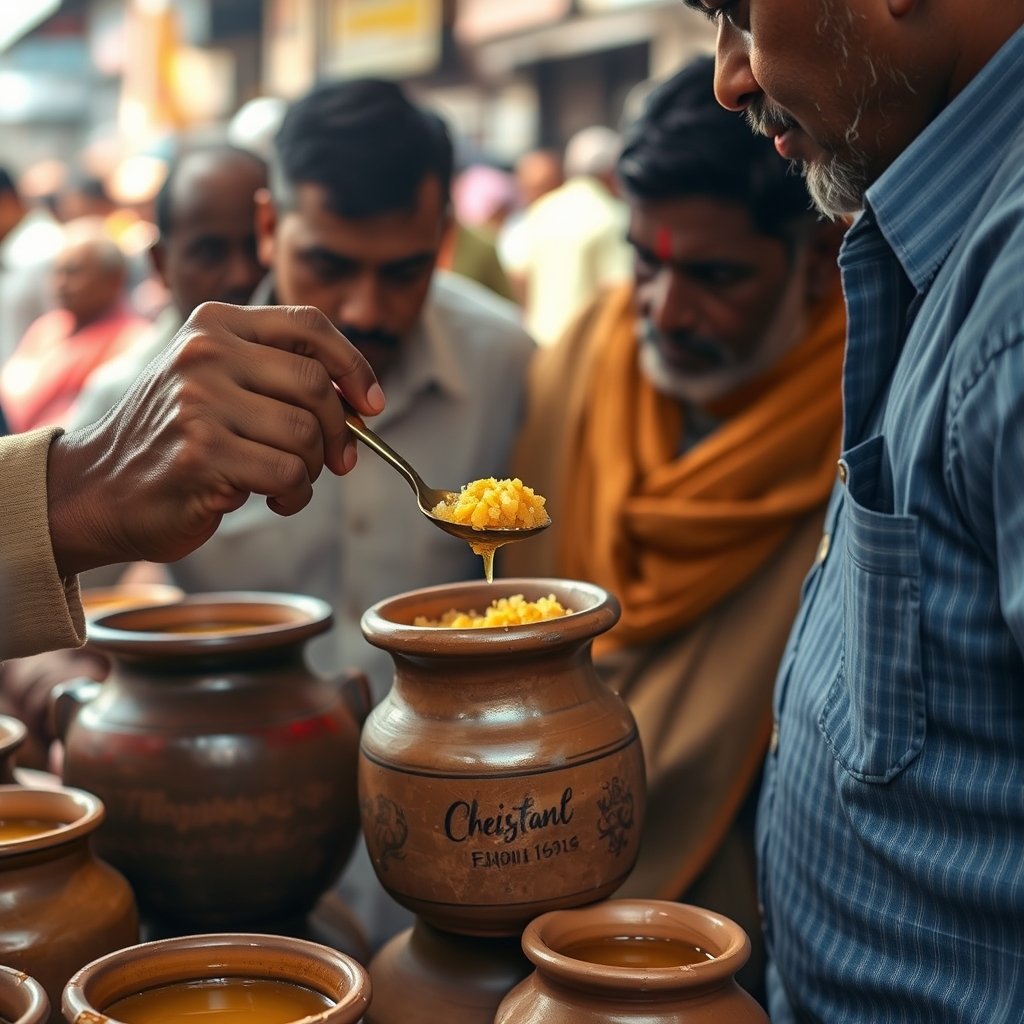
How can you distinguish between real and commercial ghee in Delhi?
To buy real desi ghee in Delhi, you must prioritize finding sellers who can verify the use of the traditional bilona method and the specific Gir cow breed rather than relying on generic purity labels. While many shops in markets like Khari Baoli or local neighborhood dairies promise 'shuddh' or 'desi' ghee, the essential difference lies in the extraction process. Authentic desi ghee is made by culturing milk into curd, churning that curd to extract white butter (makkhan), and then slow-heating that butter. Most commercial sellers in the city bypass the curd-making stage entirely, using centrifugal machines to separate cream from milk, which results in a different nutritional profile and aroma.
What does 'straight from the village' actually mean?
When a seller in a Delhi market tells you their ghee comes 'straight from the village,' they are often using a marketing term to imply freshness without providing traceability. In the context of Delhi’s supply chain, much of the milk comes from large-scale collection centers in Haryana and Uttar Pradesh. A 'village' origin does not automatically guarantee that the ghee was made using the bilona method or that it comes from a specific indigenous breed like the Gir cow. To verify this claim, ask the seller which specific district the dairy is located in and whether they maintain their own herd. Real transparency involves knowing exactly where the cows graze and how the milk is handled before it reaches the pot.
Is the claim of '100% Pure' enough to guarantee quality?
The claim of '100% Pure' is the most common phrase you will hear from ghee traders in Delhi, but it only suggests the absence of adulterants like vegetable oils or starch. It says nothing about the quality of the milk or the method of preparation. In Indian home cooking and Ayurveda, 'purity' is not just about the absence of additives; it is about the integrity of the process. Ghee made from the milk of crossbred cows or through industrial heating may be chemically 'pure' but lacks the characteristic grainy texture and nutty aroma of traditional A2 Gir cow ghee. When buying, look for 'danedaar' (grainy) texture, which is a physical hallmark of ghee that has been cooled slowly after being prepared from cultured butter.
How do you compare commercial cream-based ghee with bilona ghee?
Understanding the difference between the two most common types of ghee available in Delhi helps in making an informed purchase. Most branded canisters found in supermarkets are cream-based, while traditional makers focus on the curd-churning process.
| Feature | Cream-Based Ghee (Industrial) | Bilona Ghee (Traditional) |
|---|---|---|
| Starting Point | Fresh milk cream or malai | Whole milk cultured into curd |
| Churning Method | High-speed mechanical separators | Bi-directional hand or motor churn |
| Aroma | Mild, often faint or milky | Deep, nutty, and lingering |
| Texture | Smooth, greasy, or waxy | Distinctly grainy (Danedaar) |
| Ayurvedic Status | Considered heavy (Guru) | Considered easy to digest (Agni-deepak) |
Our cows are not use and throw

A cow that stops giving milk is still our cow. She stays on the farm, with the same feed, the same shed and the same medical care she had when she was milking. We do not sell her on and we do not let her go. That is the whole basis of the ghee we make — you cannot ask an animal for her milk and then abandon her for it.
Our mission goes further than our own herd. There are cows on the street who are injured every day, who eat plastic, who cry through the night with nobody coming. We want to take them in. The plan is a chain of Organic Farmz gaushalas in several places, so that help is not one shed in one city but something a hurt animal can actually reach.
This takes more than we can carry alone — land, fodder, vets, hands. Come and join our initiative. Anything you give goes to feed, treat and shelter these cows.

Scan with any UPI app
Bank transfer
- Account name Organic Farmz
- Bank Indian Bank
- Account number 8133177322
- IFSC code IDIB000K555
- UPI ID organicfarmz@ptaxis
On a phone, the button above opens your UPI app directly — a QR on the screen you are reading cannot be scanned by that same screen. On a laptop, scan the code with your phone instead.
Why is the 'A2' claim often misused by local sellers?
Many sellers in Delhi have started using the term 'A2' because of its growing popularity, but they may not always be sourcing milk from pure-bred indigenous cows like the Gir, Sahiwal, or Tharparkar. A2 refers to a specific beta-casein protein found in the milk of these traditional Indian breeds. Some sellers might mix A1 milk (from crossbred cows) with a small amount of A2 milk and still label the final product as A2 ghee. To ensure you are getting real A2 Gir cow ghee, ask if the seller has any documentation regarding the breed of their cattle. Genuine A2 ghee has a naturally golden-yellow hue due to the presence of beta-carotene in the A2 milk, whereas ghee from buffalo milk is typically white.
Does a high price always mean the ghee is authentic?
In the Delhi NCR market, price is a significant indicator but not a final proof of authenticity. Producing one liter of authentic bilona ghee requires approximately 25 to 30 liters of A2 Gir cow milk. Given the current price of high-quality A2 milk in regions surrounding Delhi, any ghee sold at a price close to or lower than the cost of the raw milk required to make it is likely not authentic bilona ghee. However, some high-priced boutique brands may also use industrial methods. The best approach is to look for a balance: a price that reflects the labor-intensive bilona process and a seller who can explain their production cycle from curdling to bottling in glass jars.
What specific questions should you ask a Delhi ghee seller?
To cut through the noise of sales pitches, ask three specific questions. First, ask if the ghee is made from 'malai' (cream) or 'dahi' (curd). If they say cream, it is not bilona ghee. Second, ask about the cooling process; real bilona ghee develops its grains naturally when left to cool in a temperate environment, rather than being flash-cooled in a factory. Third, ask about the packaging. Authentic, high-quality ghee should ideally be stored in glass jars to preserve its aroma and prevent chemical leaching from plastic. In a humid city like Delhi, glass also helps maintain the integrity of the fat over several months in the pantry.
How should the aroma of real Gir cow ghee behave?
The aroma of real A2 Gir cow ghee is one of its most defining characteristics, and a seller's claim can be tested the moment you open the jar. In Indian home cooking, the scent of ghee should fill the kitchen when a spoonful is added to hot dal or rotis. If the ghee has a neutral smell or smells overly like burnt milk solids, it has likely been over-processed or made from aged cream. Traditional bilona ghee has a complex, sweet, and nutty fragrance that is distinct but not overpowering. In Ayurveda, this aroma is considered a sign of the 'prana' or life force retained in the fat through careful, low-heat preparation.
Taste the difference
Small-batch A2 Gir cow ghee, hand-churned to order and delivered across India. Read how we make it if you want the detail first.
Order a jarKeep reading
-
 Where to Buy Real A2 Ghee in Delhi
Looking for genuine A2 Gir cow ghee in Delhi NCR? Learn where to find authentic bilona ghee, how to spot…
-
 Desi Ghee in Delhi: 5 Options from Kirana to Bilona
Delhi households can buy desi ghee from local kiranas, neighbourhood dairies, wholesale mandis, online apps…
-
 Khari Baoli Desi Ghee: Wholesale Fats Lack Traceability
Khari Baoli trades bulk ghee by fat content rather than farm provenance, making specific cow breed or bilona…
