
Housewarming and Griha Pravesh: Why Ghee Is Given
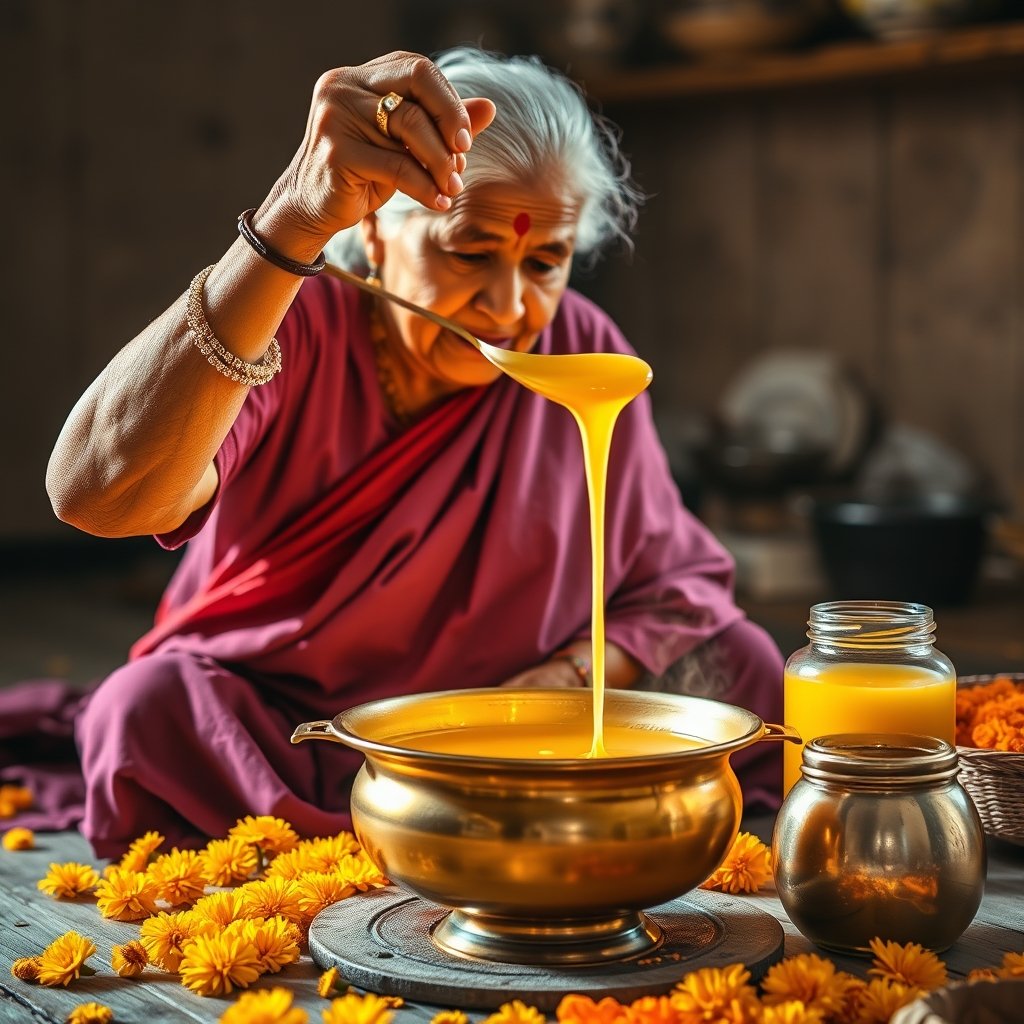
Ghee is given during a Griha Pravesh because it represents pure nourishment, lasting domestic abundance, and serves as an indispensable offering for the home's inaugural havan and first cooked meal. In Indian tradition, moving into a newly built or newly acquired house is not simply a change of address; it is the establishment of a living space, and presenting a jar of real clarified butter is one of the oldest ways to wish that the family's kitchen never runs dry.
Why is ghee considered an essential Griha Pravesh gift?
When friends and family arrive at a housewarming, traditional etiquette prioritises gifts that directly bless the hearth and the threshold. Food gifts hold a specific dignity across Indian culture, and among them, cow ghee occupies the highest shelf. Unlike decorative objects that might gather dust or duplicate something the family already owns, ghee is immediately useful, deeply auspicious, and symbolic of deep care.
In classical domestic philosophy, the kitchen is viewed as the engine of the home's daily well-being. Giving ghee signals a wish that the household will always have the means to feed its occupants, welcome unexpected guests with warmth, and prepare meals that sustain strength and peaceful living. A well-stocked pantry traditionally began with staples: whole grains, salt, jaggery, and an earthen or brass container of clean, golden ghee.
How is ghee used during the Griha Pravesh ceremony itself?
During the Griha Pravesh rituals, ghee is not merely a symbolic spectator; it is actively consumed by the sacred fire and the ceremonial pots. Before the family sets up furniture or unpacks their belongings, priests perform the Vastu Shanti and Navagraha havans to clear the space and invoke balance. Clarified butter made from indigenous cow milk is the primary ahuti (offering) poured into the agni kund, producing a steady, soot-free flame and an unmistakably clean, nutty fragrance that fills the newly painted rooms.
Beyond the havan, ghee is used to light the akhand diya—a brass lamp kept burning during the moving-in ceremonies to welcome light and positive vitality into the corners of the property. Later in the morning, when the milk-boiling ceremony (dudh ubalna) takes place on the new stove to signify overflowing prosperity, the first sweet dish offered to deities and shared among guests—often a modest kheer or sheera—is prepared with a generous spoonful of fresh ghee.
Why does the preparation method matter for a new home?
For an occasion centred on good beginnings and purity, the type of ghee matters to families who care about traditional practices. Most commercial ghee found on modern supermarket shelves is extracted from industrial cream using high-speed mechanical separators. In contrast, traditional bilona ghee begins with whole milk from indigenous cows like the Gir breed, cultured overnight into curd, and hand-churned or slowly rotated with a wooden bilona to separate makhan before slow heating over a mild flame.
This patient, multi-step process honours the whole lifecycle of milk. The result is a clarified fat that carries the natural golden tone of cow milk beta-carotene, a tender granular (danedar) texture, and a gentle aroma that feels deeply familiar. When offering something to celebrate a family's biggest milestone, bringing a jar crafted with this level of patience carries a thoughtfulness that machine-processed fats cannot replicate.
How does traditional bilona ghee compare to commercial options for housewarming?
If you are deciding what to carry to a Griha Pravesh ceremony, understanding how traditional bilona cow ghee differs from standard commercial butter oil clarifies why families value the former so highly for sacred occasions.
| Feature | Traditional Bilona A2 Gir Ghee | Commercial Industrial Ghee |
|---|---|---|
| Starting Ingredient | Cultured whole curd from indigenous cows | Raw cream or dairy by-products |
| Aroma During Havan | Mild, sweet, toasted-grain fragrance | Heavy, industrial, or neutral aroma |
| Texture in Jar | Naturally granular and layered | Uniform, smooth, or artificially stabilised |
| Ritual Purity | Aligned with classical Vedic practices | Highly mechanised commercial commodity |
| Kitchen Versatility | Suitable for puja, tadka, and daily food | Primarily used as a cooking fat |
What should you look for when choosing ghee to gift for a housewarming?
If you are selecting a jar of ghee as a housewarming offering, look closely at the ingredient list and the origin. A genuine jar should list only one ingredient: clarified butter made from cultured cow milk. It should not contain colourings, added fragrances, or chemical preservatives. Choosing ghee packed in glass jars rather than plastic containers keeps the aroma intact and presents far more gracefully on the gift table alongside traditional fruits, sweets, or coconuts.
Freshness is another practical detail. Because the recipients will likely use your gift both for their opening pujas and their family cooking throughout their first month in the new house, small-batch ghee churned close to the delivery date provides the richest taste and longest pantry life.
How can the new homeowners use the gift in their first week?
Once the excitement of the housewarming settles and the guests depart, the real work of turning a house into a home begins amidst half-unpacked boxes and tired evenings. This is when a jar of wholesome ghee becomes genuinely comforting. The family's first quiet dinner in the new dining space might simply be warm dal-chawal, seasoned with a quick tadka of cumin seeds crackled in a spoon of fragrant ghee.
From dressing morning chapatis to preparing a quick sooji halwa when close neighbours drop in to say hello, ghee supports the rhythm of daily hospitality. It is a gift that leaves no clutter behind, honours centuries of domestic tradition, and nourishes the household from the very first day they turn the key in the door.
Taste the difference
Small-batch A2 Gir cow ghee, hand-churned to order and delivered across India. Read how we make it if you want the detail first.
Order a jarKeep reading
-
 Corporate Gifting With Traditional Indian Foods
A practical guide to choosing corporate gifts that people actually use, focusing on traditional Indian…
Corporate Gifting With Traditional Indian Foods
A practical guide to choosing corporate gifts that people actually use, focusing on traditional Indian…
-
 Ghee in a New-Mother Care Package
A jar of traditional bilona ghee is one of the most practical and cherished gifts for a new mother, serving…
Ghee in a New-Mother Care Package
A jar of traditional bilona ghee is one of the most practical and cherished gifts for a new mother, serving…
-
 Ghee as a Diwali Gift
Discover why pure A2 Gir cow bilona ghee makes a thoughtful, auspicious, and long-lasting gift for your…
Ghee as a Diwali Gift
Discover why pure A2 Gir cow bilona ghee makes a thoughtful, auspicious, and long-lasting gift for your…