
Ghee in the Indian Wedding Kitchen
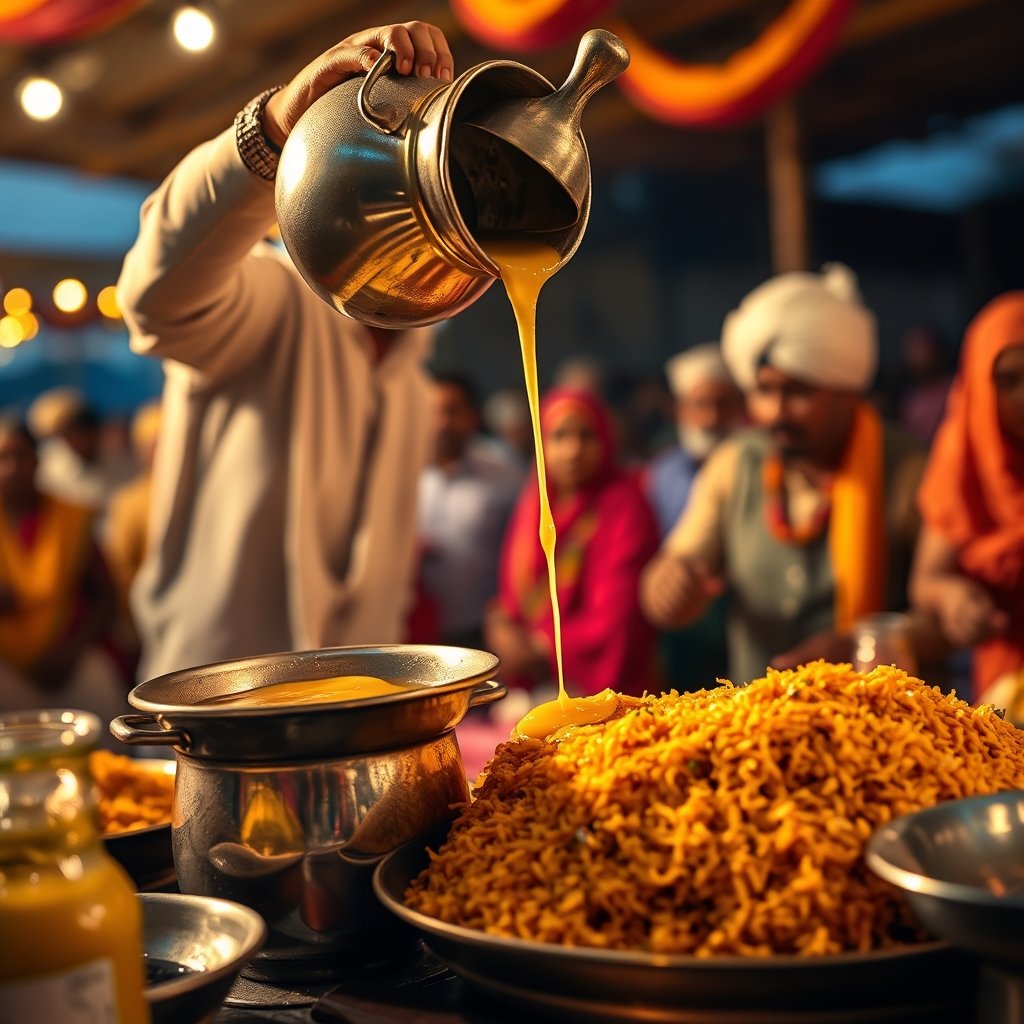
Ghee sits at the heart of the Indian wedding kitchen because it provides the heat stability, rich aroma, and cultural authenticity needed to prepare grand celebratory feasts for hundreds of guests without compromising flavour or digestion.
From the early morning preparation of traditional breakfast puris to late-night pots of slow-simmered dal and trays of fresh mithai, large-scale Indian catering relies on ghee as both a primary cooking medium and an essential finishing touch. In Indian hospitality, offering food prepared in pure cow ghee is considered the highest form of generosity and care for invited guests.
Why does ghee dominate celebratory wedding feasts?
Wedding cooking in India differs fundamentally from daily home preparation due to the sheer volume and the need for food to stay aromatic and appealing over several hours. Ghee possesses a naturally high smoke point, which allows caterers and traditional halwais to roast flours, fry delicacies, and simmer gravies at sustained high temperatures without burning the fat or releasing harsh, acrid fumes into the banquet area.
Beyond temperature tolerance, ghee acts as a natural preservative and flavour carrier. Spices like cardamom, saffron, cloves, and cinnamon bloom thoroughly in warm ghee, releasing fat-soluble aroma compounds that distribute evenly across large vats of biryani, pulao, or curries. Sweets made with pure ghee also maintain their soft crumb and glossy finish over multiple days of festivities without turning stale quickly.
Where in the wedding menu does pure ghee make the biggest difference?
While ghee touches nearly every section of a traditional wedding menu, its presence is especially vital in specific preparations where fat quality cannot be masked by heavy spicing:
Halwai Sweets and Mithai: Traditional laddoos, Mysore pak, moong dal halwa, and pedas depend entirely on slow roasting in pure ghee. The grain of the flour and the caramelisation of milk solids rely on the natural composition of curd-churned bilona ghee to achieve a melt-in-the-mouth texture.
Breads and Rice: Freshly rolled rotis, naans, and pooris are brushed or fried in ghee to retain tenderness as they cool on banquet tables. Aromatic wedding rice dishes, from saffron-laced pulao to rich dum biryanis, use ghee to separate individual grains and prevent clumping.
The Final Tadka: Wedding dals, whether a slow-cooked yellow tadka or a rich black urad preparation, receive a final aromatic sizzle of cumin, hing, and dried chillies bloomed in hot ghee right before serving to guests.
How does bilona cow ghee compare to commercial catering fats?
In large-scale catering, kitchens often choose between authentic cow ghee and industrial cooking fats. The culinary and sensory differences between them become magnified when cooking at volume.
| Feature | Traditional Bilona Cow Ghee | Commercial Shortening / Refined Fat |
|---|---|---|
| Aroma | Warm, nutty, and naturally fragrant | Neutral, flat, or artificially scented |
| Digestive Feel | Light on the stomach; kindles digestive fire | Heavy, leaves a greasy residue on the palate |
| High-Heat Performance | Stable, retains structural integrity and aroma | Can break down and impart off-flavours |
| Cooling Texture | Soft, granular, and pleasant at room temperature | Hardens into a waxy, sticky layer on cool food |
What does ayurveda say about wedding feasts and digestion?
Ayurvedic principles view celebratory wedding menus as naturally heavy, dense, and rich (guru). When guests consume multiple courses over several days, the digestive fire, known as agni, can easily become sluggish.
In classical ayurveda, pure A2 cow ghee prepared from cultured curd is considered deeply balancing. Unlike heavy industrial fats that overwhelm digestion, bilona cow ghee stimulates agni, enabling the stomach to process richer festival foods more smoothly. Its soothing properties lubricate the digestive tract, ensuring that the celebration leaves guests feeling nourished rather than weighed down.
How can families ensure authentic ghee is used at their events?
To maintain authentic flavour and quality at a wedding, families often purchase and supply their own tins of pure A2 Gir cow bilona ghee directly to the catering team rather than relying on standard commercial kitchen provisions. Clarifying upfront which dishes require 100 percent pure cow ghee—particularly the mithai, breads, and finishing tadkas—ensures that the feast honours both tradition and the well-being of every guest.