
Climate and Ghee Storage: Air Humidity Changes Texture

Yes, climate affects ghee storage because high humidity and extreme temperatures change the physical texture of the fat and increase the risk of moisture-led spoilage. While the chemical composition of A2 Gir cow ghee is remarkably stable, the environmental conditions in a city like Delhi—ranging from bone-dry heat to intense monsoon humidity—dictate how long the jar stays fresh and how the 'danedaar' or grainy texture evolves over time.
Does Delhi’s high humidity affect ghee quality?
High humidity is the primary enemy of ghee longevity because moisture encourages the growth of mold. In the traditional bilona method, we boil the butter until every trace of water evaporated, leaving behind pure milk fat. However, once you open the jar in a humid Delhi kitchen, the air inside the jar is replaced by moisture-laden ambient air. If the lid is not tightened immediately, this moisture can settle on the surface of the ghee. While the fat itself does not support bacterial growth easily, any microscopic food particles or moisture droplets can lead to spoilage. In humid months, it is essential to use a completely dry spoon and keep the jar away from the steam rising from your stove.
Can hard water in Delhi impact your ghee?
Hard water does not affect the ghee inside the jar, as the fat is a sealed environment that does not interact with the local water supply. There is a common myth that the 'heavy' water of the NCR region can cause ghee to go rancid faster, but this is scientifically inaccurate. The only way water affects your ghee is through your cleaning habits. If you wash your ghee containers with hard water and do not dry them thoroughly before refilling, the mineral deposits and residual moisture can compromise the fat. For the best results, always sun-dry or heat-dry your glass jars to ensure no local water residues remain before they come into contact with the bilona ghee.
How does extreme heat change bilona ghee texture?
Delhi’s summer temperatures, often exceeding 40 degrees Celsius, will cause A2 Gir cow ghee to transition from a semi-solid grainy state to a completely liquid form. This melting is a natural physical change and does not mean the ghee has gone bad. However, frequent melting and re-solidifying can alter the size of the grains. When ghee cools down slowly in a natural environment, it develops the large, beautiful crystals known as 'danedaar' texture. If it melts in the heat and you suddenly put it in a very cold spot, the crystals may be much smaller, resulting in a smoother, pastier feel. To maintain a consistent texture, find the coolest, darkest corner of your pantry that stays away from direct sunlight.
| Environmental Factor | Impact on Ghee Storage | Kitchen Solution |
|---|---|---|
| High Humidity | Risk of surface mold and moisture entry | Keep lid tight; use bone-dry spoons |
| Extreme Heat | Loss of graininess; liquid state | Store in a dark, shaded pantry corner |
Our cows are not use and throw

A cow that stops giving milk is still our cow. She stays on the farm, with the same feed, the same shed and the same medical care she had when she was milking. We do not sell her on and we do not let her go. That is the whole basis of the ghee we make — you cannot ask an animal for her milk and then abandon her for it.
Our mission goes further than our own herd. There are cows on the street who are injured every day, who eat plastic, who cry through the night with nobody coming. We want to take them in. The plan is a chain of Organic Farmz gaushalas in several places, so that help is not one shed in one city but something a hurt animal can actually reach.
This takes more than we can carry alone — land, fodder, vets, hands. Come and join our initiative. Anything you give goes to feed, treat and shelter these cows.

Scan with any UPI app
Bank transfer
- Account name Organic Farmz
- Bank Indian Bank
- Account number 8133177322
- IFSC code IDIB000K555
- UPI ID organicfarmz@ptaxis
On a phone, the button above opens your UPI app directly — a QR on the screen you are reading cannot be scanned by that same screen. On a laptop, scan the code with your phone instead.
Why is airtight storage vital in polluted environments?
Air quality and pollutants can indirectly affect the sensory experience of ghee because fats are highly absorbent. Ghee acts like a sponge for aromas. In areas with high levels of dust or kitchen smoke, an improperly sealed jar will allow the ghee to absorb the smells of the surrounding environment. This can mask the natural, nutty aroma of A2 Gir cow ghee made by the bilona method. In ayurveda, the purity of the 'shuddha' ghee is paramount, and keeping it protected from the 'vayu' (air) of the city ensures that the delicate scent of charred milk solids remains intact from the first spoon to the last.
How can you maintain ghee freshness in NCR?
Maintaining freshness in the National Capital Region requires a seasonal approach to storage. During the dry winter months, ghee is most stable and maintains its solid, grainy structure with ease. During the monsoon and peak summer, more care is needed. Avoid keeping the main jar on the kitchen counter where it is exposed to heat from the burners and steam from cooking dal or rice. Instead, transfer a small amount of ghee—enough for three to four days—into a smaller glass utility jar for daily use. Keep the larger 'mother jar' tucked away in a cool cupboard. This limits the number of times the bulk of your ghee is exposed to the fluctuating air and humidity of the kitchen.
Does the bilona method help ghee last longer in Delhi?
The traditional bilona method involves a long, slow cooking process that is superior to industrial cream-separation for shelf stability. Because bilona ghee is cooked until the curd solids are fully browned and all moisture is eliminated, it has a naturally low moisture content. This makes it more resilient to the environmental stresses of the Delhi climate compared to butter or industrially processed fats. While we do not use any preservatives, the inherent stability of the A2 Gir cow milk fat, processed through the curd-to-butter route, provides a robust shelf life even without refrigeration, provided the basic rules of dry storage are followed.
Taste the difference
Small-batch A2 Gir cow ghee, hand-churned to order and delivered across India. Read how we make it if you want the detail first.
Order a jarKeep reading
-
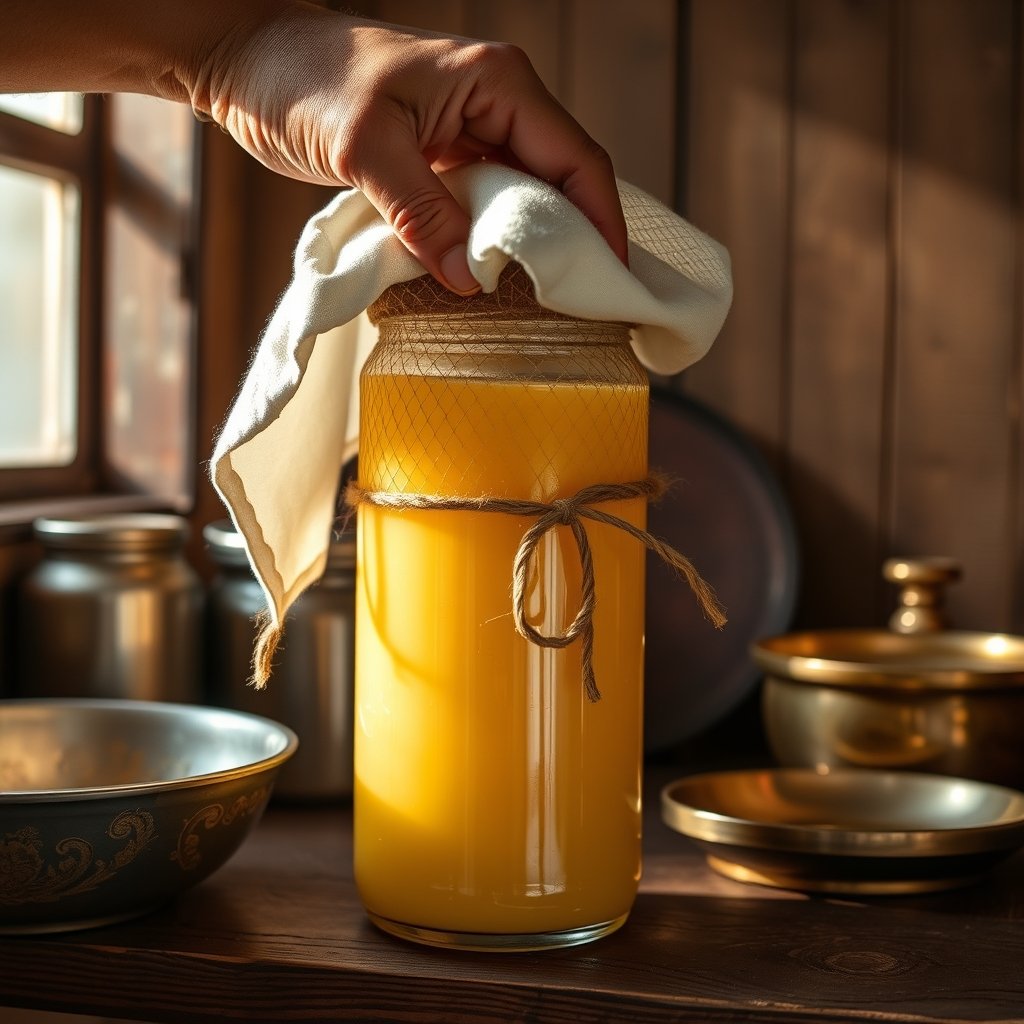 How to Store Ghee Properly
Authentic bilona ghee is naturally shelf-stable, but external moisture is its silent enemy. Learn how simple…
-
 Storing Ghee in a Delhi Summer
Learn how to maintain the quality and aroma of your A2 Gir cow ghee during the intense Indian summer without…
-
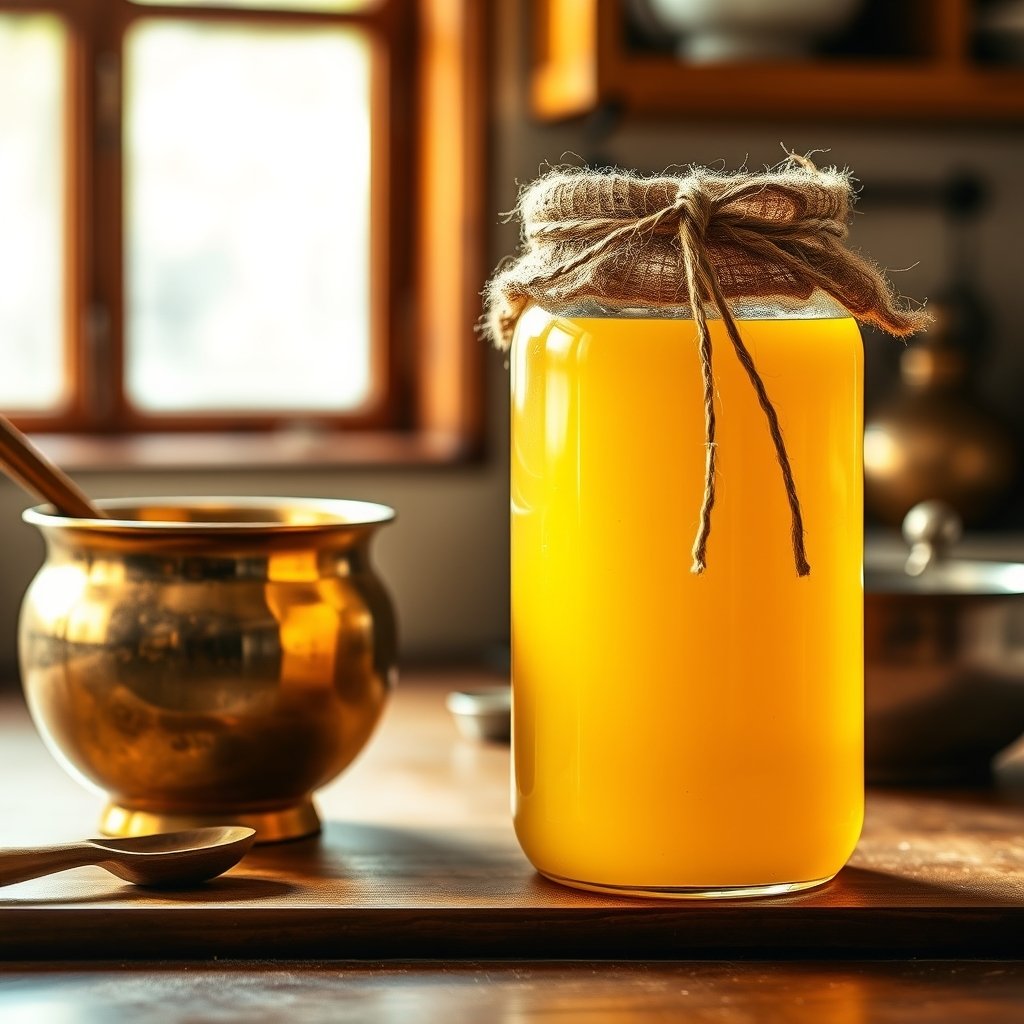 Storing Ghee in Brass: Choose Glass or Steel Instead
Brass and copper vessels react with ghee over time, causing oxidation and a metallic taste. Glass, ceramic…
