
Cow Ghee vs Buffalo Ghee: Golden and Soft vs White and Firm

Cow ghee is golden-yellow, softer at room temperature and more strongly aromatic. Buffalo ghee is near-white, firmer and comes from noticeably richer milk. Both are real ghee. They behave differently in the pan and they look different in the jar, and the difference starts with the animal.
Why is cow ghee yellow and buffalo ghee white?
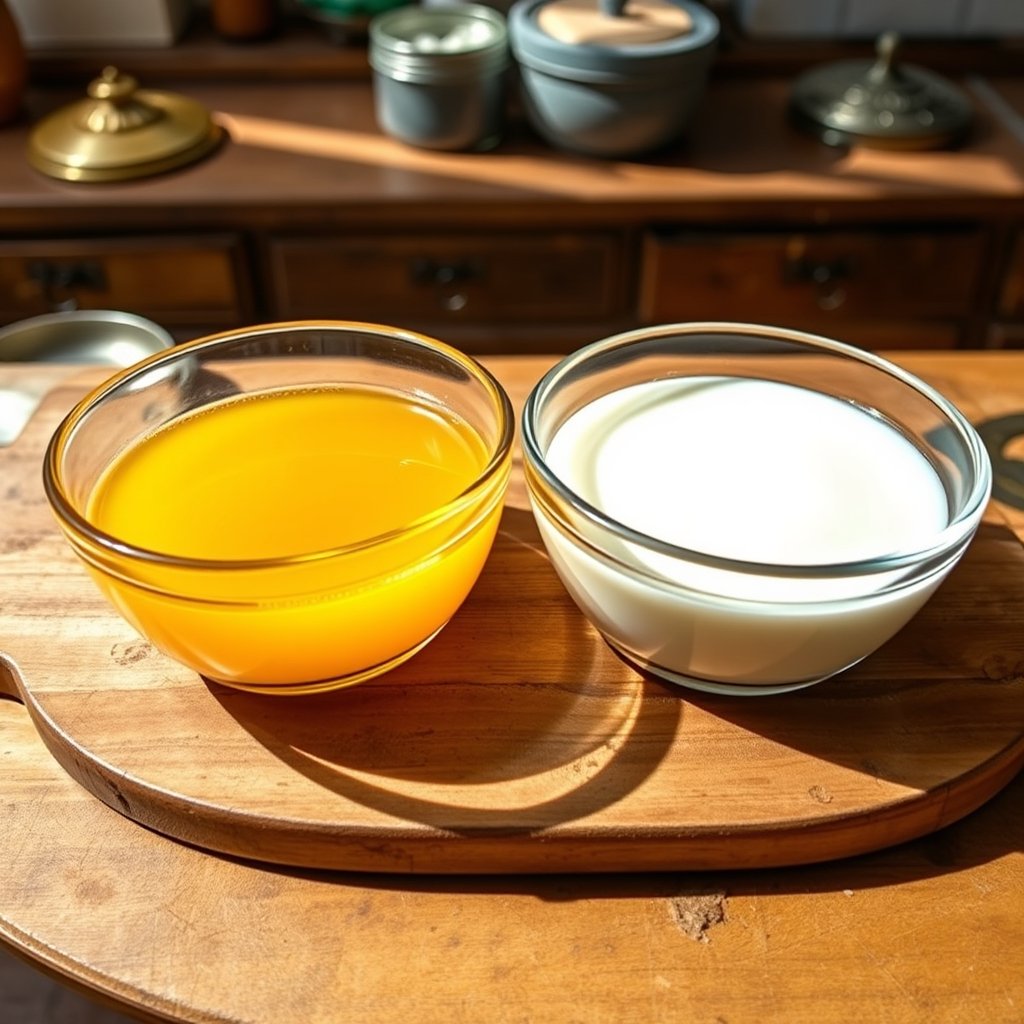
Colour is the quickest way to tell them apart. Cow milk carries carotene — the same class of pigment that colours carrots — which survives into the ghee and gives it its golden cast. Buffalo milk carries very little of it, so buffalo ghee comes out closer to ivory or white.
A jar's colour therefore tells you something real about what it was made from. It does not tell you how it was made: a pale cow ghee and a deep golden one can both be genuine, since what the cows graze on shifts the shade through the year.
How do they differ in the kitchen?
| Cow ghee | Buffalo ghee | |
|---|---|---|
| Colour | Golden-yellow | Near-white to ivory |
| Texture when set | Softer, often grainy | Firmer, denser |
| Aroma | More pronounced, nutty | Milder, heavier |
| Source milk | Lower fat | Higher fat |
| Suits | Finishing, tadka, sweets, drizzling | Bulk cooking, richness |
Our cows are not use and throw
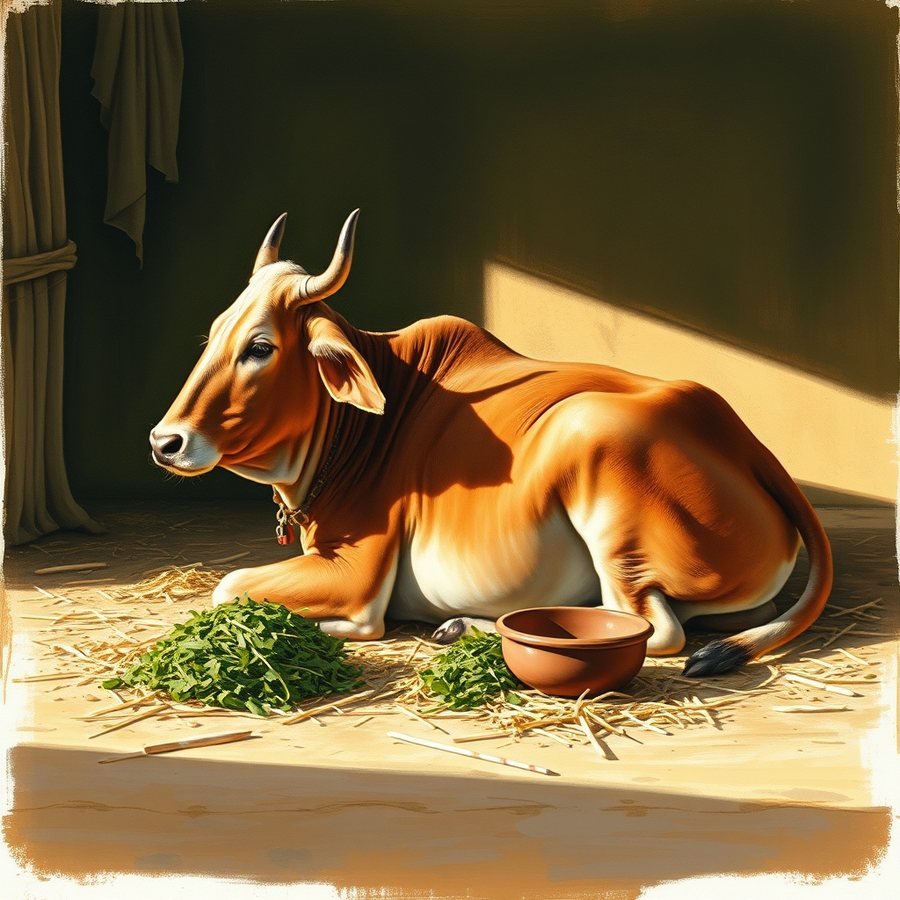
A cow that stops giving milk is still our cow. She stays on the farm, with the same feed, the same shed and the same medical care she had when she was milking. We do not sell her on and we do not let her go. That is the whole basis of the ghee we make — you cannot ask an animal for her milk and then abandon her for it.
Our mission goes further than our own herd. There are cows on the street who are injured every day, who eat plastic, who cry through the night with nobody coming. We want to take them in. The plan is a chain of Organic Farmz gaushalas in several places, so that help is not one shed in one city but something a hurt animal can actually reach.
This takes more than we can carry alone — land, fodder, vets, hands. Come and join our initiative. Anything you give goes to feed, treat and shelter these cows.

Scan with any UPI app
Bank transfer
- Account name Organic Farmz
- Bank Indian Bank
- Account number 8133177322
- IFSC code IDIB000K555
- UPI ID organicfarmz@ptaxis
On a phone, the button above opens your UPI app directly — a QR on the screen you are reading cannot be scanned by that same screen. On a laptop, scan the code with your phone instead.
Which one should you buy?
Choose by the job, not by a ranking.
- For tadka, for finishing dal or rice, for halwa and ladoo — cow ghee, because the aroma is the point and it is the more expressive of the two.
- For cooking in quantity where you want richness rather than fragrance — buffalo ghee does that job and tends to cost less per litre.
Neither is a substitute for the other in a dish where the ghee is meant to be tasted.
Where does A2 fit into this?
A2 describes a protein in the milk, not the species. Indigenous Indian cow breeds such as Gir carry the A2 form of beta-casein, whereas most crossbred dairy cattle carry A1. It is a statement about the breed and its milk — not a health claim, and not something you can see or taste in the jar.
So "A2 ghee" narrows things twice over: cow rather than buffalo, and an indigenous breed rather than a crossbred herd. How that milk becomes ghee is a separate question, and it matters at least as much as which animal it came from.
Taste the difference
Small-batch A2 Gir cow ghee, hand-churned to order and delivered across India. Read how we make it if you want the detail first.
Order a jarKeep reading
-
 Ghee colour in English: why it differs
Ghee colour in English reflects the animal source and diet. Cow ghee is yellow due to beta-carotene, while…
Ghee colour in English: why it differs
Ghee colour in English reflects the animal source and diet. Cow ghee is yellow due to beta-carotene, while…
-
 Ghee Reseller Pricing Strategy: Protect Landed Margin
A ghee reseller pricing strategy succeeds by calculating true landed costs including packaging and shipping…
Ghee Reseller Pricing Strategy: Protect Landed Margin
A ghee reseller pricing strategy succeeds by calculating true landed costs including packaging and shipping…
-
 D2C Ghee Brand India: The Work Is Front of House
Launching a D2C ghee brand in India succeeds or fails on customer service, packaging, and brand reach rather…
D2C Ghee Brand India: The Work Is Front of House
Launching a D2C ghee brand in India succeeds or fails on customer service, packaging, and brand reach rather…
