
Buying Bilona Ghee in Noida and Gurgaon
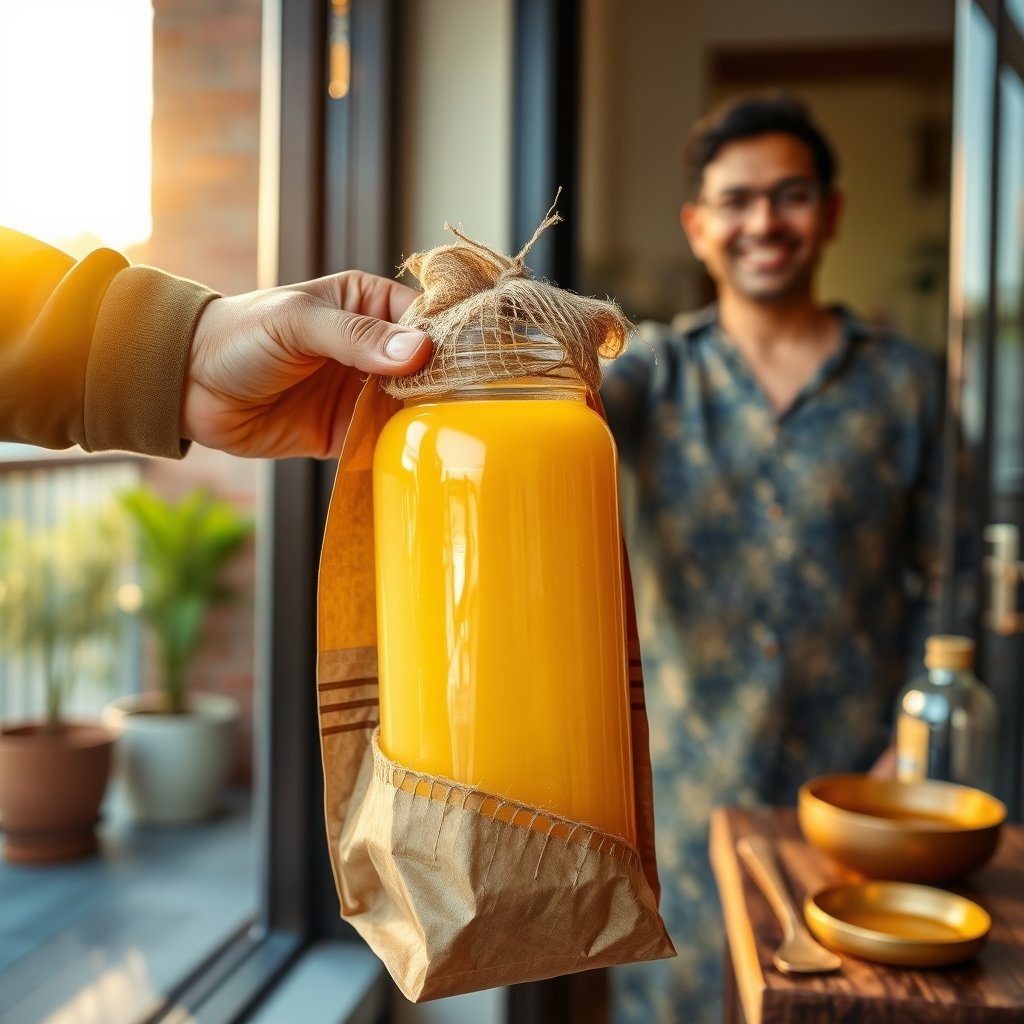
You can buy authentic bilona ghee in Noida and Gurgaon by ordering directly from trusted farm producers that churn cultured curd from A2 Gir cow milk in small batches and ship in protective glass jars straight to your doorstep across the National Capital Region (NCR).
Finding pure, unadulterated ghee in high-density urban areas like Gurgaon and Noida has become a common challenge for households. While local convenience stores, gourmet supermarkets, and quick-delivery apps offer dozens of commercial ghee brands, most of these products are manufactured using industrial methods rather than the age-old bilona process rooted in Indian tradition and ayurveda.
Where can you find authentic bilona ghee in Gurgaon and Noida?
The most reliable way to buy real bilona ghee in Gurgaon—from DLF Phases and Golf Course Extension to Sohna Road—and across Noida sectors is through direct-to-consumer farm websites. Authentic bilona ghee is prepared by boiling whole A2 Gir cow milk, setting it into curd overnight, churning the curd with a wooden churner (bilona) to separate makkhan, and gently heating that makkhan over low fire until golden, fragrant ghee remains.
Because this process yields only around one litre of ghee from 25 to 30 litres of milk, traditional producers rarely sell through mass-market hypermarket shelves where distributor margins and prolonged warehouse storage compromise freshness. Direct farm delivery ensures the ghee reaches your kitchen within days of being made, retaining its natural granular (danedar) texture and subtle earthy aroma.
Our cows are not use and throw

A cow that stops giving milk is still our cow. She stays on the farm, with the same feed, the same shed and the same medical care she had when she was milking. We do not sell her on and we do not let her go. That is the whole basis of the ghee we make — you cannot ask an animal for her milk and then abandon her for it.
Our mission goes further than our own herd. There are cows on the street who are injured every day, who eat plastic, who cry through the night with nobody coming. We want to take them in. The plan is a chain of Organic Farmz gaushalas in several places, so that help is not one shed in one city but something a hurt animal can actually reach.
This takes more than we can carry alone — land, fodder, vets, hands. Come and join our initiative. Anything you give goes to feed, treat and shelter these cows.

Scan with any UPI app
Bank transfer
- Account name Organic Farmz
- Bank Indian Bank
- Account number 8133177322
- IFSC code IDIB000K555
- UPI ID organicfarmz@ptaxis
On a phone, the button above opens your UPI app directly — a QR on the screen you are reading cannot be scanned by that same screen. On a laptop, scan the code with your phone instead.
Why is commercial cream ghee different from bilona ghee?
Most commercial ghee tins available in NCR grocery stores are made through industrial cream separation. In this modern method, milk is run through high-speed mechanical separators to extract raw cream, which is boiled directly to produce fat. It skips the essential fermentation step entirely.
In contrast, the ayurvedic method requires culturing the milk into curd first. The natural fermentation introduces organic acids and alters the fat structure, yielding a lighter, aromatic, and easily digestible cooking fat prized in Indian home cooking.
| Feature | Commercial Cream-Separator Ghee | Traditional A2 Bilona Ghee |
|---|---|---|
| Base Ingredient | Raw industrial cream or malai | Naturally set whole A2 curd (dahi) |
| Method | Direct boiling of extracted cream | Two-way churning (bilona) of curd to extract makkhan |
| Texture & Aroma | Often greasy or artificially uniform | Naturally granular (danedar) with a nutty aroma |
| Production Scale | Mass industrial batches | Small, artisanal farm batches |
| Packaging | Tin cans or plastic pouches | Food-grade glass jars |
What should you check before ordering bilona ghee online in NCR?
When searching for genuine bilona ghee in Gurgaon or Noida, look closely at how the brand explains its process. Authentic makers are transparent about the breed of cow, the diet of the cattle, and the exact steps taken in the dairy shed.
First, verify that the ghee comes specifically from native Indian humped cows, such as Gir or Sahiwal, which naturally produce A2 beta-casein milk. Second, confirm that the jar contains cultured bilona ghee made from makkhan, not boiled raw cream. Third, ensure the product is packed in sturdy glass jars rather than plastic containers, as warm ghee can interact with synthetic polymers during transport across summer transit hubs in Delhi NCR.
How should you store your bilona ghee in Noida and Gurgaon apartments?
Living in high-rise apartments in Gurgaon or Noida brings specific climate considerations. In peak summers, apartment kitchens can become very warm, causing the ghee to liquefy. During winter months, it will naturally solidify into a dense, grainy paste.
Both states are completely normal and do not affect the quality or purity of the ghee. Keep your glass jar in a dark, dry kitchen cabinet away from direct sunlight and the heat of the stove. Do not refrigerate your bilona ghee, as cooling traps moisture inside the jar every time it is opened, which can spoil the fat. Always use a clean, dry stainless steel spoon to ensure your ghee remains fresh down to the last spoonful.
Taste the difference
Small-batch A2 Gir cow ghee, hand-churned to order and delivered across India. Read how we make it if you want the detail first.
Order a jarKeep reading
-
 Ghee Delivery in Delhi NCR: From Churn to Doorstep
Ghee home delivery in Delhi NCR moves fresh bilona glass jars directly from rural farm fulfillment points to…
-
 A2 Ghee in Gurgaon: Buy Direct or Pick Retail
To buy A2 ghee in Gurgaon, choose direct maker delivery for fresh bilona batches or high-end retail stores…
-
 A2 Ghee in Ghaziabad and Greater Noida: Bilona Pots
Authentic A2 Gir cow bilona ghee is available for direct delivery to Ghaziabad and Greater Noida townships…
